Tag: glasses

  • Reader Letters: My Cat Has Pushed Everything I Own, What Now?

    Reader Letters: My Cat Has Pushed Everything I Own, What Now?

    Dear Laboratory,

    My cat has pushed my phone, my keys, my plants and my wine glasses off every surface in the house. I have run out of things. What do I do?

    Dear reader,

    First, thank you for writing, and for your contribution to science. You are now the owner of a fully tested home.

    Second, you have not run out of things. You have run out of things that you are willing to see fall. There is a world of objects out there, and some of them are cheap.

    Third, consider a replacement table with a lower edge, a heavier mug and a smaller phone. Fourth, consider that your cat is not misbehaving but expressing a deep curiosity about the world, and that in her mind, you are her principal investigator.

    Best of luck, The Laboratory

    Follow up from a reader

    A second letter has arrived from the same reader, who says she has taken our advice, bought a table with a lower edge, and placed a weighted mug upon it. Her cat has since pushed the table. We are reviewing the case and will return with updated guidance.

    A note on the nature of cats

    The Laboratory wishes to remind all readers that a cat is not a vandal but a scientist, and that her laboratory is your home. If this is not comforting, we suggest replacing your possessions with items made of foam, which have the added benefit of being quiet.

    Disclaimer

    The Laboratory’s advice column is provided for entertainment and mild alarm. No two homes are alike, no two cats are alike, and no two mugs are alike, although they are all, in the end, the same mug. Please do not make decisions about your home based on what we have written.

    Postscript

    If you wish to send a letter of your own, please address it to the Laboratory and place it on the floor.
  • Equipment Review: The Standard Glass of Water, Version 4

    Equipment Review: The Standard Glass of Water, Version 4

    The Standard Glass of Water has been the Laboratory’s workhorse since our founding. Version 4 improves on its predecessor in three important ways, and regresses in one.

    Improvements

    • The base has been narrowed by two millimetres, which makes it more eager to leave.
    • The walls are thinner, producing a higher pitched and more satisfying sound on impact.
    • The water now sits at an optimal level, high enough to cause a splash and low enough that nobody is angry about the amount.

    Regression

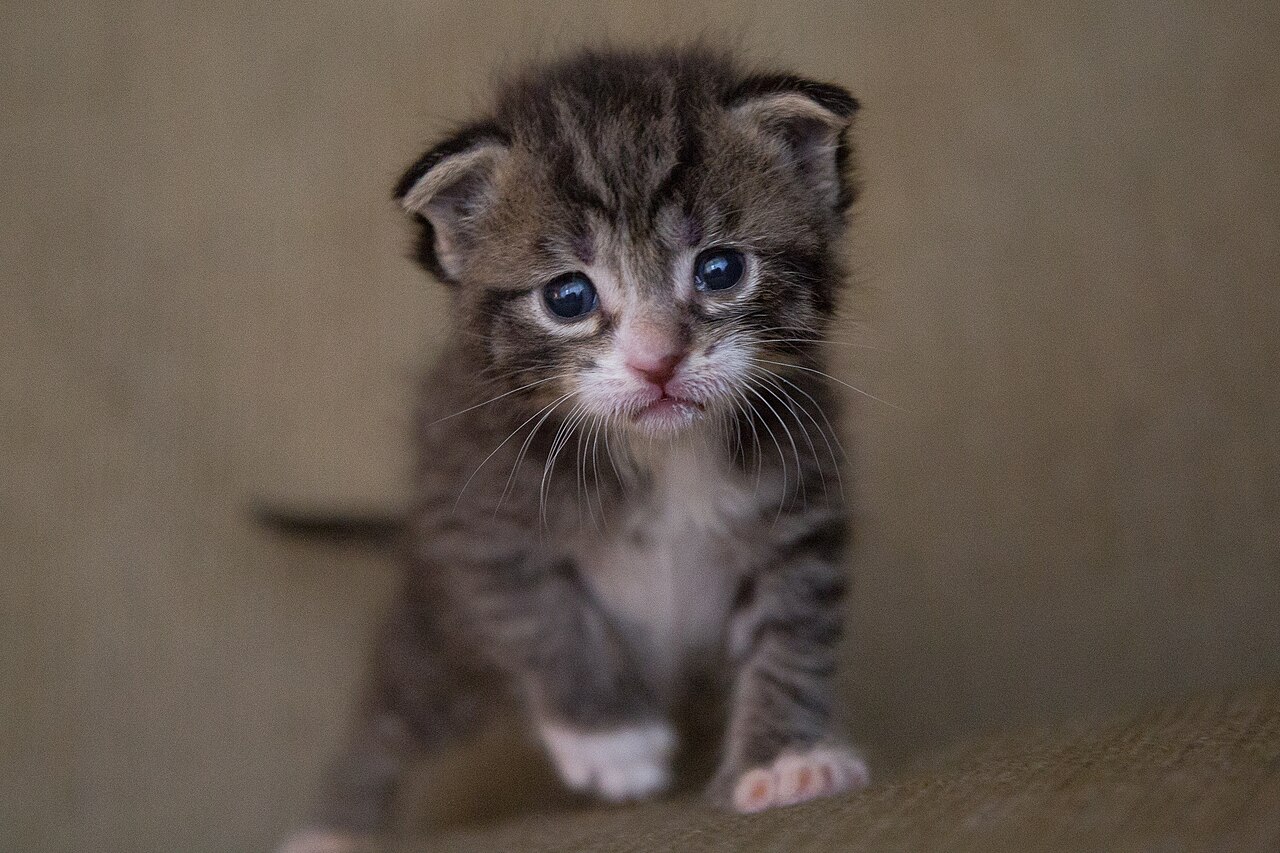
    The new glass is slightly heavier, and one of our smaller associates, a kitten named Parsley, cannot push it alone. We have addressed this by teaching Parsley to enlist a friend.

    Verdict

    Four out of five paws. We would give five, but the glass costs more than the cat, and the cat knows it.

    Technical specifications

    • Capacity: 250 millilitres of water, or 190 millilitres of water plus 60 millilitres of regret.
    • Height: 11 centimetres, a figure chosen for its appeal to the paw.
    • Weight when full: 410 grams, which is enough to be satisfying and not enough to hurt.
    • Colour: transparent, so that the water can be observed leaving.

    User testimonials

    “I have pushed twelve of these and not a single one has failed me.” Dumpling, Senior Associate.

    “Version 3 was a little stubborn. Version 4 is a dream.” Pickle, Junior Associate.

    “I do not push glasses. I merely stand near them.” Gerald, Head of Safety, who was seen pushing a glass.

    Care and maintenance

    Store the Standard Glass of Water on a high shelf, in the dark, away from cats. Then give up and store it wherever the cat has already decided it should be. Wash gently, dry carefully, and expect the unexpected, since the glass has a long and complicated history with the floor.

    Where to buy

    The Standard Glass is available from the Laboratory shop, which is a box by the door. Please leave a note and a coin. The note will be pushed.

  • Frequently Asked Questions About Our Grant Funding

    Frequently Asked Questions About Our Grant Funding

    Who funds the Laboratory?

    We are supported by a loose collection of benefactors, including a retired tuna merchant, a society for the appreciation of crashes, and a person who once visited and left a large cheque on the floor, where it remains.

    What does the grant pay for?

    Roughly forty percent goes to glassware. A further thirty percent goes to cleaning supplies. The remaining thirty percent is held in reserve against things we cannot predict, such as the discovery of a new shelf.

    Can I donate a fragile heirloom?

    We appreciate the gesture but must decline. We have a firm policy of using only our own heirlooms, which we purchase cheaply and in bulk from a source we will not name.

    Do the cats get paid?

    The cats are compensated at a rate of one treat per push, with a bonus for pushes that cause a visible reaction. Several cats have asked for a pension. We are exploring a plan that involves a warm cushion.

    Is this a real laboratory?

    It is a laboratory in the sense that things happen in it.

    Where is the audit report?

    The audit report was prepared in the usual way, on a single sheet of paper, and placed on Table One for safekeeping. It is currently in a place the Laboratory is still exploring.

    Do you publish your results?

    We publish our results in an annual leaflet, printed on durable paper, which is sometimes folded into a bird. Peer reviewers are welcome to comment. Past comments have included “interesting,” “loud,” and a single drawing of a fish.

    What if I disagree with the results?

    Disagreement is welcome and will be filed under the heading of Feedback, which is a drawer. We review the drawer every spring and have found nothing in it yet but a sock.

    How can I join the Laboratory?

    Applicants should submit a short statement of interest, a recent photograph, and a clear demonstration of pushing ability. A trial period of six weeks is required, during which you will be asked to sit still. Few pass this stage.

  • Gravity Is Not a Suggestion: A Lecture Transcript

    Gravity Is Not a Suggestion: A Lecture Transcript

    Good morning, everyone. Please settle down. No, you cannot sit on the projector. Today’s lecture concerns gravity, which is a force that pulls things downward, and which we have come to rely upon for most of our professional work.

    What gravity does

    Gravity is the reason a glass of water, once pushed, reaches the floor. It does not need to be told twice. It does not ask whether the glass was full. It is the most reliable colleague we have ever had.

    What gravity does not do

    Gravity does not apply to cats on the back of a sofa, or to a cat who has decided she is a loaf. In such cases we suspend the usual rules and observe from a polite distance.

    Questions

    A small kitten near the front asked whether a glass could ever fall upward. I said that it could not, but that I admired the optimism.

    Homework

    Please push something small off something high tonight and write down how you felt. Do not tell your humans it was homework. They will not understand.

    Appendix: selected questions from the floor

    A tabby near the back asked what happens if the object is lighter than air. I told her we have not yet found one, but we remain open to a very small balloon.

    A grey kitten asked why gravity does not simply stop when you ask it to. I said that the same applies to the dinner bell, and that this is a profound observation about reality.

    Someone then asked whether the lecture was nearly over. I said that it had been, for some time, and thanked the room for staying awake. Half of it had not.

    Further reading

    Students are encouraged to consult the Laboratory’s leaflet series, including “Down: A Short History,” “Why Things Roll,” and the forthcoming “Edges, Fears and Hopes.” All are printed on sturdy card and are available from the front desk or the floor beneath it.